No products in the cart.
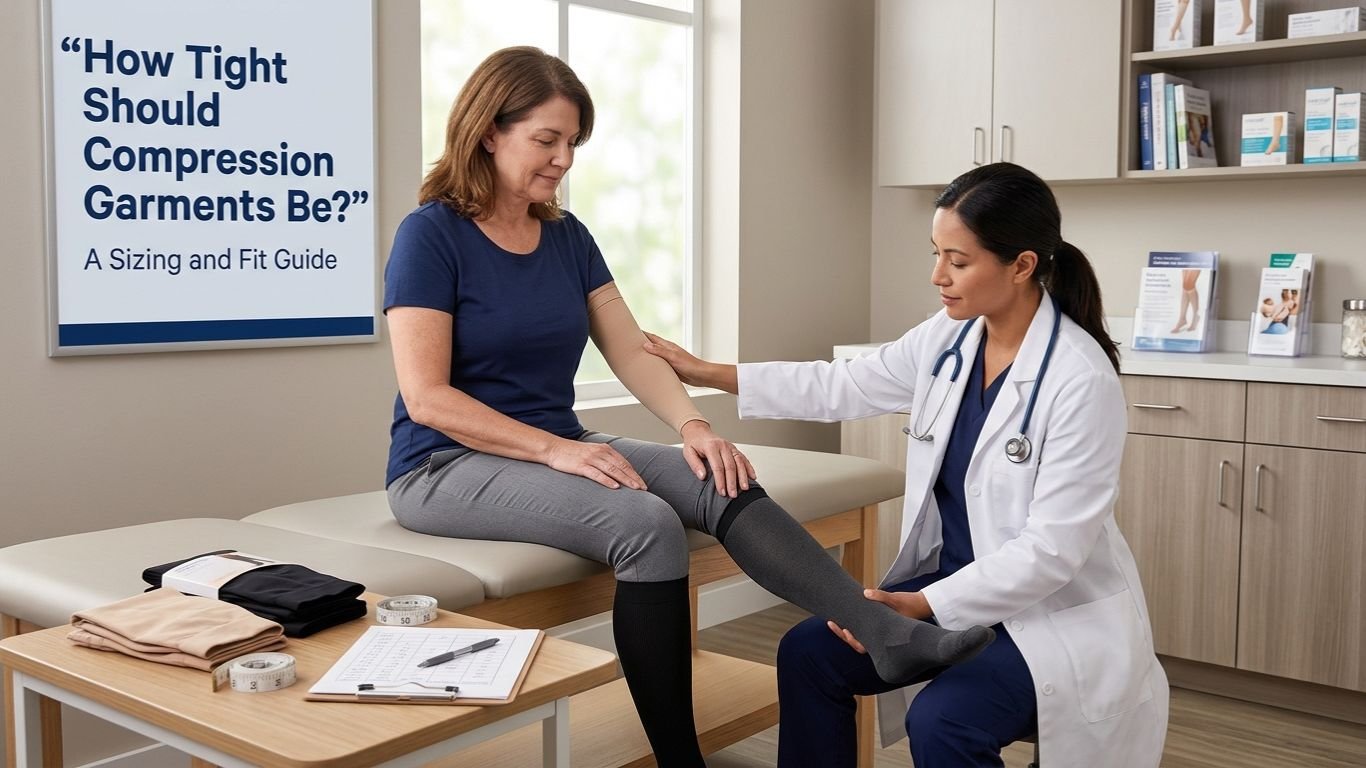
Compression garments have become a cornerstone of both medical treatment and athletic recovery across Canada. Whether you have been prescribed them for lymphedema, varicose veins, or post-surgical healing, or you are reaching for a pair of compression sleeves before a morning run, one question comes up more than almost any other: how tight should they actually be?
Getting the fit right is not just a matter of comfort; it directly determines whether your compression garment works at all. Too loose and you lose the therapeutic graduated pressure that drives blood back toward the heart. Too tight and you risk cutting off circulation, causing nerve damage, or developing painful skin irritation. This guide walks you through everything you need to know about sizing, pressure levels, and finding the fit that actually works for your body and your needs.
What “Compression” Actually Means
Before diving into fit, it helps to understand what compression garments are doing mechanically. These garments apply graduated compression, meaning the pressure is highest at the furthest point from the heart (typically the ankle or wrist) and gradually decreases as the garment moves upward. This pressure gradient encourages blood and lymphatic fluid to flow upward rather than pool in the lower extremities.
The pressure is measured in millimetres of mercury, abbreviated as mmHg, the same unit used to measure blood pressure. This number is the single most important factor in determining whether a garment is appropriate for your condition, and it is where most people go wrong when buying compression wear without guidance.
Understanding Compression Levels
Compression garments are sold in four primary pressure ranges, each suited to different needs.
1. 8-15 mmHg – Mild Compression
This is the lightest level, found in many over-the-counter travel socks and everyday wellness products. It provides minimal support and is best for people who spend long hours on their feet, travelling on planes, or looking for light fatigue relief.
2. 15-20 mmHg – Moderate Compression
A step up from mild, this level is widely used for mild varicose veins, minor swelling, and general circulatory support. Many athletes also choose this range for performance wear and light recovery.
3. 20-30 mmHg – Firm Compression
This is the most commonly prescribed medical range. It is appropriate for moderate-to-severe varicose veins, management of oedema, deep vein thrombosis (DVT) prevention, and post-surgical recovery. Most lymphedema sleeves fall in this range as well.
4. 30-40 mmHg – Extra-Firm Compression
Reserved for more serious medical conditions, including severe lymphedema, chronic venous insufficiency, and certain post-thrombotic conditions. Garments in this range should only be used under direct medical supervision. Anything above 40 mmHg is considered prescription-only and requires professional fitting.
How Tight Is Too Tight?
The most reliable test for correct fit is the “snug but not painful” rule. A properly fitted compression garment should feel like a firm, even hug around the limb, with noticeable pressure, but never pain, numbness, tingling, or restricted movement.
Signs Your Compression Garment Is Too Tight
- Skin bulging above or below the garment’s edges
- Numbness, tingling, or a pins-and-needles sensation
- Skin discolouration: the area turns red, blue, or white
- Pain or aching that worsens while wearing the garment
- Difficulty getting the garment on, even with a donning aid
Signs Your Compression Garment Is Too Loose
- The garment slides or bunches during wear
- Wrinkles or folds in the fabric, particularly at the ankle
- You cannot feel any discernible pressure at all
- Swelling continues unchanged after consistent use
If you experience any of the “too tight” symptoms, remove the garment immediately and consult a healthcare provider before trying again.
How to Measure Yourself Correctly
Proper sizing starts with accurate measurements, and for compression garments, measurements must be taken at specific anatomical points, not just waist or shoe size. Always take measurements in the morning, before swelling has had a chance to accumulate throughout the day. Use a soft measuring tape and measure over bare skin, not over clothing.
Measurements for Compression Socks and Stockings
- Ankle circumference (measured just above the ankle bone)
- Calf circumference (at the widest point)
- Leg length from the floor to just below the knee (knee-high) or to the upper thigh (thigh-high)
Measurements for Compression Sleeves and Arm Garments
- Wrist circumference
- Forearm circumference (at the widest point)
- Upper arm circumference
- Arm length from wrist to axilla (armpit)
If you are measuring for medical-grade compression garments, it is strongly recommended to have a certified fitter or occupational therapist take your measurements to ensure accuracy.
Compression Garments for Specific Uses
1. Post-Surgical Compression Garments
Garments used after liposuction, tummy tucks, or breast surgeries are typically fitted by the surgical team before the procedure. These garments apply firm, even pressure to reduce oedema, support healing tissue, and help the body conform to its new contours. They are meant to be snug, not comfortable in the traditional sense, but they should never cause pain at the incision sites.
2. Lymphedema Sleeves
Lymphedema compression garments require a particularly precise fit because even minor variations in pressure can worsen the condition rather than help it. Flat-knit garments (custom-made) are often recommended over circular-knit (off-the-shelf) options for patients with significant limb shape changes.
3. Athletic Compression Garments
Compression shorts, leggings, and sleeves for running or cycling work at lower pressure levels and are designed to be worn during activity. These should feel tight and supportive without restricting your range of motion. If your compression shorts are affecting your stride or your sleeve is causing your fingers to swell during a workout, the fit is off.
4. Compression Garments for DVT Prevention During Travel
Compression garments for long-haul flights should be put on before boarding, ideally while still at home or at the gate. Airline cabins cause feet and ankles to swell, so garments that feel fine on the ground may feel tighter mid-flight. Starting with 15-20 mmHg is wise for first-time users.
Common Sizing Mistakes to Avoid
Buying Based on Clothing Size
One of the most frequent errors people make is purchasing compression garments based solely on shoe size or clothing size. These measurements have almost no correlation with the precise circumference measurements that determine compression garment sizing.
Ignoring Brand-Specific Size Charts
A “medium” in one brand can correspond to entirely different measurements in another. Always check the manufacturer’s chart using your actual measurements; never assume sizing is universal.
Measuring When Limbs Are Already Swollen
Many people try on compression garments when their limbs are already swollen, typically in the afternoon or evening. This leads to selecting a size that is too large, meaning the garment provides insufficient compression once the swelling reduces in the morning.
Frequently Asked Questions
Q1. Can I wear compression garments to bed?
In most cases, no. Compression garments are designed for daytime wear when you are upright and active. Wearing them overnight can restrict circulation when your body is in a horizontal, resting state. However, certain medical conditions may require overnight compression; always follow your doctor’s specific instructions.
Q2. How often should I replace my compression garments?
Most compression garments lose their elasticity and therapeutic pressure after approximately three to six months of regular daily wear. Replace them when they no longer feel snug or when visible stretching appears in the fabric.
Q3. Do compression garments shrink after washing?
Quality compression garments made with spandex and nylon blends should not shrink significantly if cared for properly. Avoid high heat tumble drying, or ironing can break down elastic fibres quickly, reducing the mmHg pressure the garment delivers.
Q4. Should both legs be the same size for compression stockings?
Not necessarily. Many people have measurable differences between limbs, particularly those with lymphedema or post-surgical swelling. Always measure each limb separately and order accordingly, even if that means different sizes for each side.
Q5. When should I see a doctor about a compression garment fit?
If you experience persistent pain, skin breakdown, blistering, or worsening swelling while wearing compression garments, see a healthcare provider promptly. A poor fit in a medical-grade garment can cause harm, not just discomfort.
Conclusion
Getting the fit of your compression garments right is the difference between a garment that genuinely supports your health and one that sits unused in a drawer. Whether you are managing a chronic condition, recovering from surgery, or optimising your athletic performance, compression therapy only works when the pressure, size, and garment type are correctly matched to your body and your goals. For Canadians who require medically tailored compression solutions, particularly custom-compounded formulations to support wound care or skin sensitivity alongside compression therapy, Aurora Compounding Pharmacy provides expert guidance and access to specialised products that work in partnership with your compression garment protocol. Consulting a knowledgeable pharmacy or healthcare provider before purchasing higher-grade compression garments ensures you get the right pressure, the right fit, and the right results from the very first wear.